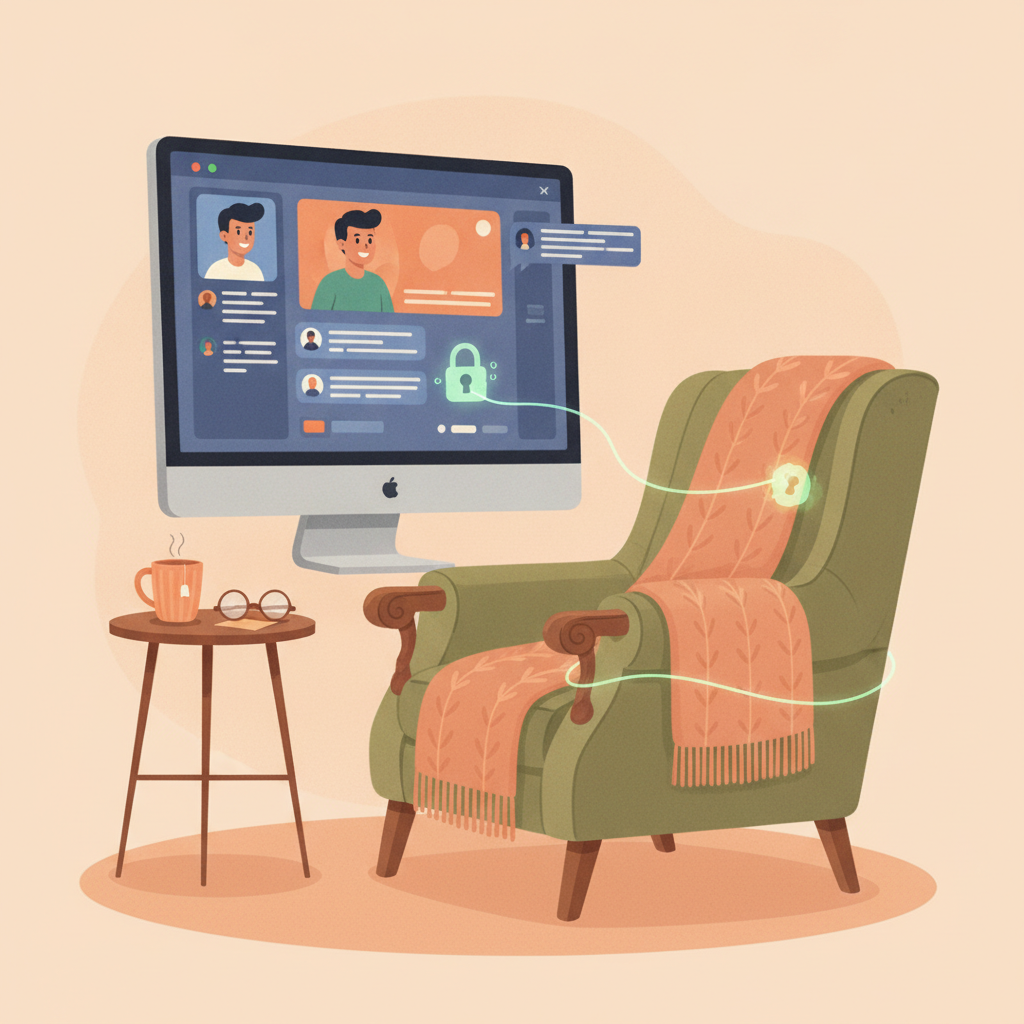
A chat message on Twitch, the kind viewers type by the thousand every minute, can now make a streamer’s own computer run code it was never told to run. Researchers found that OBS Studio, the software most streamers use to broadcast, can be tricked through the very chat overlays that make a stream feel alive: alerts that pop up when someone follows, on-screen counters, little animations tied to specific words. Streamers wired those features together over years, letting plain chat text trigger actions on their machine. Twitch chat was built to carry conversation. Somewhere along the way, thousands of setups quietly handed it the keys to carry commands instead, and nobody checked whether the door that let conversation in could also let code in.
The same pattern shows up in places that have nothing to do with software. Every system runs on assumptions nobody wrote down: this input is just talk, this appetite is basically fixed, this audience only wants content in its own language. Those assumptions hold for a long time, right up until something convenient enough comes along to test them, and the test almost never announces itself. It shows up disguised as a feature.
Look at what GLP-1 drugs are doing to fast food menus this week. Chains that spent seven decades building around one steady premise, that hunger is elastic and marketing can always stretch it, are now redesigning menus for a growing share of customers whose appetite has been turned down at the source. Smaller portions. More protein, less filler. Ordering habits that look nothing like the value-meal logic the whole industry was optimized around. Nobody at these companies wrote “assume appetite only grows” into a strategy deck. It was just the ground everything else stood on, the same way “chat is only talk” was the ground OBS Studio’s plugin ecosystem stood on. A drug did in a few years what decades of health campaigns and pricing tricks never managed, because it did not try to change what people want to eat. It changed what their bodies ask for, which turns out to be the far bigger lever. Wanting less, it turns out, breaks more business models than wanting different ever did.
The same thing is happening to what people watch. Spanish and Portuguese-language shows are surging on streaming platforms in places nobody would have bet on a decade ago, and the reason is almost embarrassingly simple. Broadcast television built its whole distribution logic around a wall: content made in one language stays in its home market, because a network scheduler in Ohio has no reason to program a telenovela. That wall was never really about what viewers wanted. It was a side effect of who controlled the schedule. Streaming recommendation systems do not check where a show was made or what language it started in; they check whether people who started watching kept watching. Once the gatekeeper changed from a programmer with a clipboard to an algorithm reading completion rates, the wall came down because it turns out the wall was never load-bearing for the audience. It was only load-bearing for the org chart.
A security team assumed chat was inert and built automation on top of that assumption. A restaurant industry assumed appetite only climbs and built its whole cost structure on that assumption. A media industry assumed language was a hard border and built its distribution on that assumption. None of these were reckless bets at the time. They were reasonable defaults that quietly hardened into architecture, the way a load-bearing wall starts as a decision someone made once and stops being a decision at all. Assumptions always break eventually. What breaks them is not a catastrophe but something almost boring. A convenient plugin. A drug approved for diabetes. A recommendation engine nobody built to care about subtitles.
None of this is really a story about decline, whatever the headlines want to make of the security angle. It is closer to an audit nobody scheduled, showing up on its own timeline and handing back information the systems never had before: this is what you actually assumed, and here is the bill. A well-run system does not pretend it has no untested assumptions; that is not available to anyone. What it can do is notice the anomaly without panicking into the wrong fix, trace it back to the boundary that let it through, and pay the bill while it is still small. OBS Studio gets to patch a vulnerability because a researcher reported it, not because a stream got hijacked live in front of an audience. A fast food chain gets to redesign a menu, not lose a decade of stores. A streaming platform gets a hit show instead of a shareholder asking why the algorithm missed a market that was there all along.
The bill for an unverified assumption gets written the day the assumption is built into the system, not the day someone finds it. All that is ever really in question is who discovers it first, and whether they were paying attention when they did. Chat windows, appetite, and subtitles do not know they are the same story. That is exactly why they keep being it.
Leave a Reply