Infrastructure & Platforms
The layer below the model: data centers, energy, cloud, platform economics, and the rules that govern who gets to build on whom.

What iPhone System Data Actually Is and Why It Keeps Growing
A 256GB iPhone can report that 40GB of its space is consumed by something called “System Data,” and the owner has no way to see what is inside it, delete any of it, or do anything about it beyond waiting. The label is a single bucket, and iOS does not break it down into files,…

Dropbox’s $350 Million Bet on Tigris Data Shows Who Actually Builds the Agent Economy
Dropbox spent $350 million this week to buy Tigris Data, a startup building AI infrastructure, and folded it straight into a company whose entire business has always been holding other people’s files. That is an odd thing for a storage company to need, until you ask what an AI agent actually requires to act on…

Mastercard’s OpenAI and Tencent Deal: The Rails, Not the Model, Are the Prize
Mastercard ($MA) announced OpenAI and Tencent would join its network as partners in agentic commerce, according to a PYMNTS report on the new partnerships. The deal lets software written by those two companies reach for a card and settle a bill without a human hand on the transaction. The deal is described in terms of…

Gas, Not Models, Is the Shared Chokepoint in AI’s Near-Term Risk
The S-1 that Anthropic filed lists natural gas supply as a near-term risk, treating it not as a hypothetical model scenario but as a physical constraint on compute capacity itself. The filing notes that gas deliveries and storage availability could disrupt data center operations, which makes the question unavoidable: why does the fuel in pipelines…

AI Infrastructure Payoffs Compound in the Cloud, Not the IPO
AI debt fears are receding ahead of earnings from Oracle ($ORCL), Alphabet ($GOOGL), and Amazon ($AMZN), and investors are beginning to reprice the capital commitments that built today’s AI stack. The question this revaluation raises is not whether AI spending will pay off, but when and for whom it pays off at all. Venture capitalists…

OpenAI and Google Found Ancient PHP Bugs. The Real Story Is What They Couldn’t Map
A research team at Wiz, the security firm owned by Alphabet ($GOOGL), worked alongside researchers from OpenAI last week. Together they traced a flaw buried in PHP, the scripting language that has run a large share of the web since the 1990s. Nothing about the underlying bug was new; what changed was who found it,…

When Google Cloud Failed, UK Banks Paid a Bill They Never Signed
This week, Google Cloud went down, and the trouble did not stop at search results or video queues. It reached into Britain’s banking system, where several banks and payment services built on that cloud went dark with it. Customers could not move their own money until the outage ran its course, according to an ABC…

The Price of Compute That Never Turns On
Microsoft’s cancellation of Nscale’s data center in Essex reveals what capital alone cannot buy. Nscale had planned 23,040 Nvidia GPUs at its Loughton site by early 2027, with 50 megawatts of initial capacity expanding to 90. The project anchored a reported $24 billion contract with Microsoft and supported the company’s $35 billion IPO target. U.K.…
TSMC’s Capacity Fight Shows Why AI in Software Stopped Being a Choice
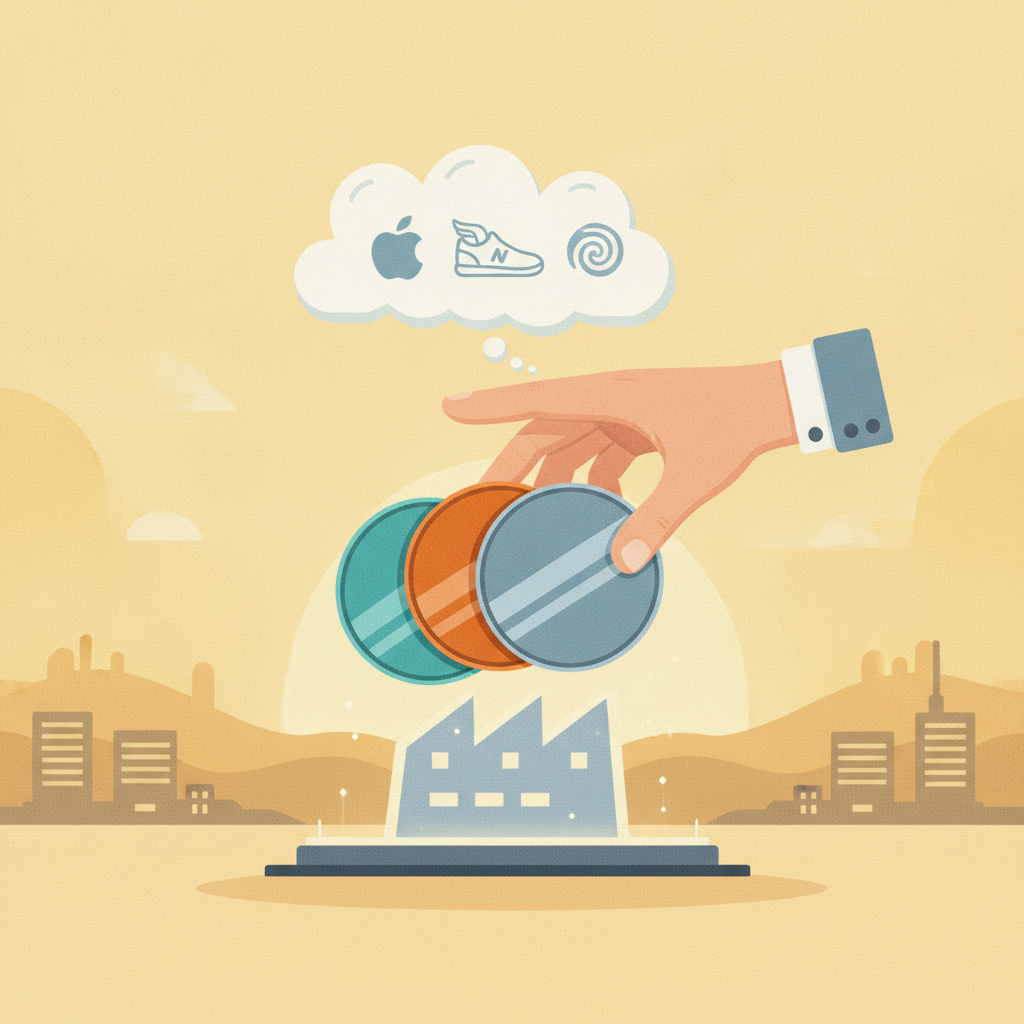
TSMC just posted a record quarter, and the fight over what comes next is not about yield or price. Nvidia, Apple, and Broadcom are reportedly competing for the same production slots at the same foundry, and CNBC’s reporting calls the contest for capacity “fierce.” That word matters more than the earnings number. A record quarter…

A Touchscreen Mac and the Second MacBook Pro That Keeps the Answer Open
Apple’s first touchscreen Mac is reportedly arriving beside a second MacBook Pro that keeps the current design. What does shipping both say?