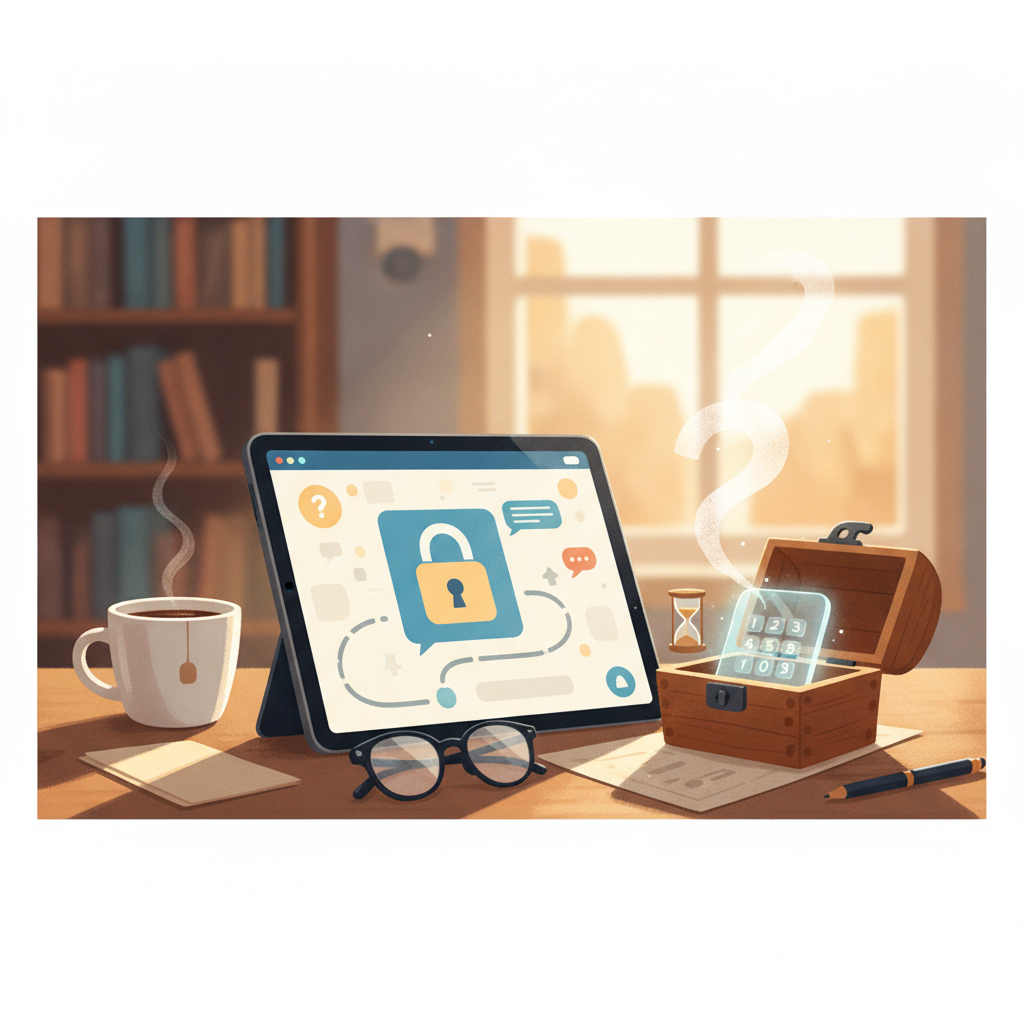
A four-digit PIN now hides a locked ChatGPT conversation from search and from anyone glancing at your screen, and OpenAI is explicit about what happens if that PIN is forgotten: the conversation does not stay locked, it disappears. Not hidden, not pending recovery, gone. A feature built to protect a conversation is also, by its own design, the only tool capable of destroying it completely. If the PIN is there to protect, what exactly does it destroy the day someone forgets it?
The answer is not just one conversation. It is the assumption that protection and recovery were ever supposed to travel together, that locking something away and losing it forever could be treated as two separate risks instead of one. OpenAI made a second decision this same week that draws the identical line, in a department that has nothing to do with chat privacy.
The company said it would no longer train its models on the live, open internet at all, citing what TechCrunch called significant risks in training on live data. One decision is a privacy feature for users; the other is a safety policy for a research lab, and on their face they look like opposites, a convenience added in one place and removed in another. But the mechanism underneath both choices is the same. Forget the PIN and the chat cannot come back. Cut the model’s pipeline to the open web and the model cannot come back to it either.
The missing recovery path is not a cost OpenAI accepted for safety, but the safety itself. That reading gets the order of operations backward. The missing recovery path is not a cost the company accepted in exchange for safety. In both cases, it is the safety.
Leslie Jamison, in The Empathy Exams, warns that an appeal to protection can calcify into something that no longer needs an actual remedy to justify itself, until invoking the wound matters more than healing it: a “pain cult that keeps legitimating, almost legislating, more of itself.” Jamison is writing about pain and its representation, not software, but she is naming the same mechanism. Once a lock exists mainly to prove that protection happened, rather than to leave a door back in, the missing door stops being an oversight. It becomes the entire argument for why the lock can be trusted at all.
An unrecoverable PIN is the only kind of PIN that proves no one, not even OpenAI, holds a spare key. A training policy with no sunset clause is the only kind of policy that proves the company is not still pulling fresh material from the web behind the scenes. Build either one with an exit, and the exit is exactly what makes the promise unbelievable. The loss of recovery is not the price of the hard line. It is the hard line.
If that holds, the same logic will probably extend further than this week’s two decisions. OpenAI would probably add more locks that even its own engineers cannot pick, not because a regulator asked for one, but because an unlockable lock is the only kind anyone has reason to believe in.
A model trained only on a closing window of material would probably start to show its age in ways users notice well before the company says so in public. Reversing the training policy would then likely cost what reversing a forgotten PIN costs: everything built on the decision since it was made, discarded rather than restored. A future ChatGPT needing fresher material would most likely require training a wholly new model on a new sealed window, rather than patching the old one.
Both decisions can still be the right call. A lock that even its own maker cannot pick is, in most cases, better than one with a spare key. But the real question was always who stands on the losing side of a line once there is no way back across it: the person who forgot four digits, or the model that will spend years working from whatever the web looked like on the day its door closed. A line drawn to be permanent protects whoever drew it, not whoever stands on the other side of it.
Leave a Reply