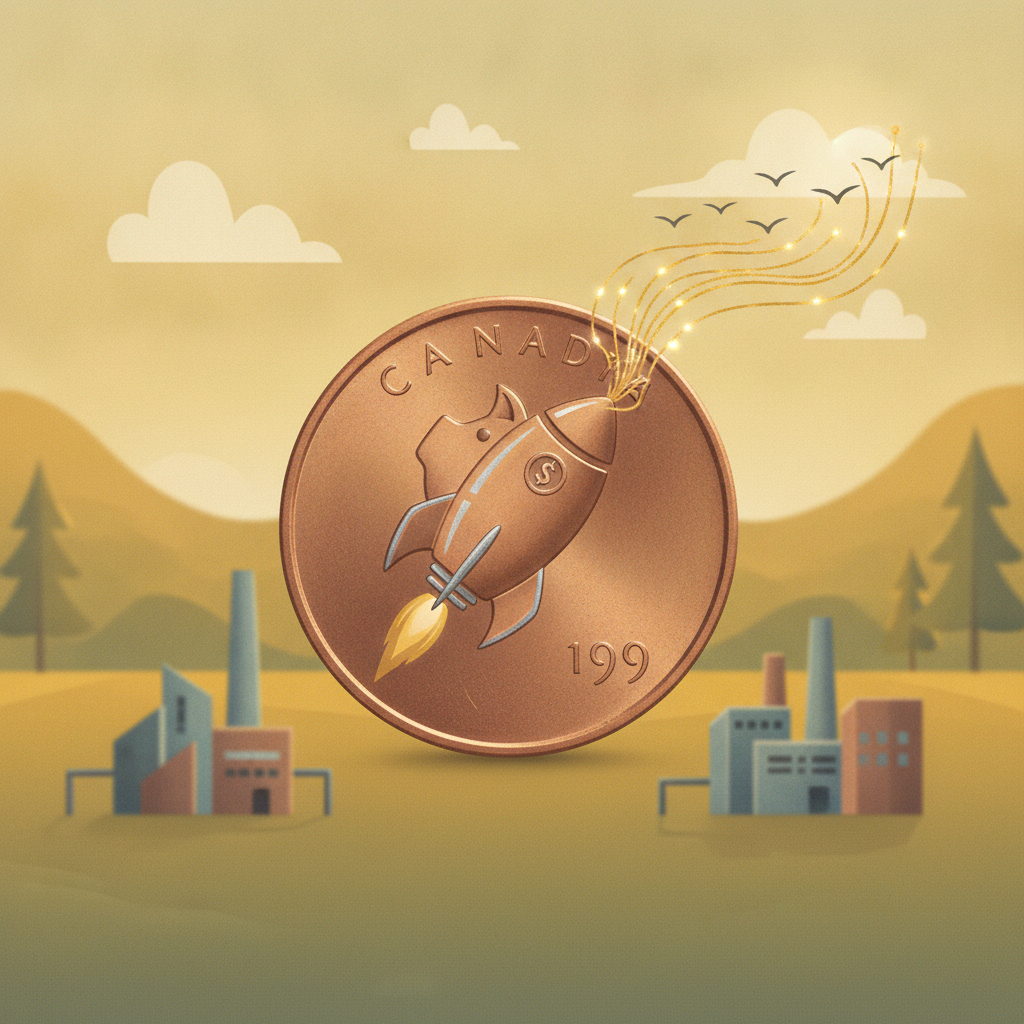
$75 billion. That is what SpaceX raised this week, the largest public offering anyone has ever recorded. Not a valuation, not a paper number, but actual capital, handed over, in exchange for a slice of a company that builds and lands rockets. It is a strange amount to absorb in a single sitting. It is also, if you squint, the most honest signal the market has sent in a while about what it now believes is scarce. The argument worth making out of it is not about rockets at all. It is this: the cost of producing things has collapsed toward zero, and as it falls, every dollar of value quietly relocates to the handful of things that still cannot be produced cheaply. The record check and the panic about software that writes itself are not two stories. They are one story, read from opposite ends.
Because in the same news cycle, the other headline is the opposite of scarcity. Wired’s account of how AI agents threw the tech world into disarray describes software that no longer waits for a prompt, that chains its own steps, writes its own code, files its own tickets, and occasionally does all of that wrong at three in the morning while everyone is asleep. The framing is chaos. The reality underneath is simpler and stranger: the cost of producing a thing, whether that thing is a paragraph, a function, a design, or a plan, has fallen close to nothing. We have built machines that generate output the way a tap generates water, and we have not yet decided what to do about a world where the tap never turns off.
Hold those two facts next to each other and they stop looking like separate stories. One is a flood. The other is a check for the largest amount of money ever pooled into a single company at once. The flood is what happens when supply becomes infinite. The check is what happens when something stays rare. And the thing the market just paid a record price for is precisely the thing no agent can produce by typing faster: hardware that survives reentry, a launch cadence measured in days, a supply chain that took two decades to assemble and cannot be cloned in an afternoon. The Financial Times called it the world’s biggest IPO, which is a fact about size. The more interesting fact is about category. Of all the places that money could have gone in a year when software got radically cheaper to make, it went to metal.
Abundance Is Not the Same as Value
There is an old assumption, quietly load-bearing in most of how we think about technology, that more is better. More content. More throughput. More capacity. For most of the last thirty years that assumption held, because production really was the bottleneck. The hard part was making the thing. Distribution, attention, and trust all felt like downstream problems, the sort of thing you solved after you had something to distribute. Whole business models were built on the premise that if you could manufacture supply faster than anyone else, the rest would follow.
Agents break that assumption cleanly, and they break it faster than most organizations can reprice around. When anyone can generate ten thousand words, ten thousand words are worth roughly nothing. When any company can ship a feature overnight, shipping a feature is no longer the moat; it is table stakes that everyone clears by lunch. Abundance does not raise the floor of value, which is the comfortable thing to believe. It lowers it. The water is everywhere now, and water that is everywhere is free, no matter how good it tastes. That is not a moral claim about quality. A generated function can be excellent and still be worthless as a competitive asset, because excellence that anyone can summon on demand is not a differentiator.
What survives that flood is not the thing that produces the most. It is the thing that filters the most. The judgment about what is worth keeping. The taste to throw away the other nine thousand nine hundred words and defend the hundred that remain. The trust that lets someone hand you their money without reading the fine print, because they have watched you land the rocket fifty times and have stopped needing the explanation. Filtering, not producing, becomes the scarce skill, and scarce skills are where money quietly relocates long before anyone writes the think piece announcing that it has moved.
That is the real subtext of a record offering landing in the same week as the agent panic. Capital is not confused, and it is not chasing a story. It is doing what capital always does: fleeing the places where supply just went infinite, and crowding into the places where supply is still hard. You cannot agent your way to a landing pad. You cannot prompt a factory into existence, or compress twenty years of failed launches into a weekend of iteration. The premium is on the part that stayed physical, stayed slow, and stayed expensive to copy, which is also the part that looked least fashionable for most of the last decade.
The Chaos Is Just the Filter That Does Not Exist Yet
When people call the agent moment chaos, what they are describing is the gap between infinite production and the filters that have not caught up. We can suddenly make anything, and we have not yet built the systems that decide what is worth having. The disorder is real, but it is not a property of the technology. It is a property of the interval. That is the awkward middle, and it is temporary in the way that all awkward middles are temporary, which is to say it ends eventually and feels permanent while you are inside it.
Every time production got cheap before, the same sequence ran. Printing, recording, and publishing each produced a flood, then a panic, then slowly the rise of the people and tools that knew how to sort the flood. The librarians. The editors. The ranking algorithms. The ones who made abundance usable by getting very good at deciding what to ignore. Notice what that history actually rewards. In each case the money did not end up with whoever could print, press, or publish fastest, because that capability commoditized within a generation. It ended up with whoever owned the shelf, the catalog, the index, or the reputation that told a reader where to look. The filter outlived the press.
Where the Money Goes When Output Is Free
The companies that win the next few years will not be the ones that generate the most. Generation is now a commodity and is being priced accordingly, in public, in real time. The winners will be the ones that own a filter the agents cannot reproduce: a reputation, a physical asset, a base of trust, a thing that took years to accumulate and cannot be conjured on request. SpaceX happens to own one of the most literal versions of that, a moat made of metal and time, and the pricing of the offering at $75 billion is the market saying out loud what it has been implying for a while. It is worth sitting with the friction between those two headlines. One publication reports the biggest pool of capital ever assembled for a single listing; another reports an industry thrown into disarray by software that can produce endlessly and cheaply. The friction is the finding. Money does not flee chaos at random. It flees the specific kind of chaos that comes from supply going infinite, and it lands on whatever the flood cannot reach.
So here is the quiet trade hiding inside both stories. As the cost of making things falls toward nothing, the value of the things that cannot be made cheaply rises to meet it, dollar for dollar, whether or not anyone narrates the transfer. The flood and the record check are the same event seen from two ends. We are about to drown in output, and the only dry ground left will be judgment, trust, and the rare things that still take a long time to build. If you are deciding where to spend the next few years of your attention, that is the map: not the part of your work that an agent can do at three in the morning, but the part that only counts because someone accountable stood behind it.
That is the bet underneath $75 billion. Not that rockets are the future, but that scarcity is. In a world where anything can be produced, the last thing worth owning is the thing that can’t be.
Leave a Reply